
How to Make Pour-Over Coffee at Home: Gear and a Simple Recipe
Everything you need for great pour-over coffee — dripper, kettle, scale and grinder — plus a simple recipe to start with.

Pour-over coffee gives you a clean, bright cup and full control over how it's made. It needs only a few pieces of gear, and all of them fit in a cupboard.
What you need
The pour-over kit
-
 (opens Amazon in a new tab)
Fellow
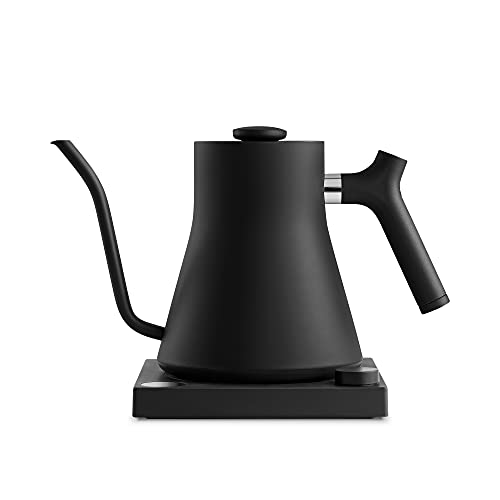
Stagg EKG Electric Gooseneck Kettle
Currently unavailable on Amazon
Availability as of – Details
Product prices and availability are accurate as of the date/time indicated and are subject to change. Any price and availability information displayed on Amazon.com at the time of purchase will apply to the purchase of this product.
-
 (opens Amazon in a new tab)
Baratza
Encore Conical Burr Coffee Grinder
$149.95 on Amazon
Price as of – Details
Product prices and availability are accurate as of the date/time indicated and are subject to change. Any price and availability information displayed on Amazon.com at the time of purchase will apply to the purchase of this product.
A simple starting recipe
- Heat water to just off the boil (around 93–96 °C / 200–205 °F).
- Grind 15 g of coffee medium-fine and rinse the paper filter in the dripper.
- Pour about 40 g of water to wet the grounds and wait 30–45 seconds.
- Pour slowly in circles until the scale reads 250 g.
- Aim to finish draining at around 3 minutes. Too fast? Grind finer. Too slow? Grind coarser.
Hario
V60 Ceramic Coffee Dripper Size 02
The classic cone pour-over dripper, handmade in Japan from Arita ceramic, with spiral ribs and one large opening.
Why a gooseneck kettle helps
A narrow spout lets you pour slowly and exactly where you want, which keeps the coffee bed even. A kettle with temperature control also removes the guesswork about water temperature.
(opens Amazon in a new tab)
Kettle pick
Fellow Stagg EKG Electric Gooseneck Kettle
An electric gooseneck kettle with to-the-degree temperature control, a hold mode and a built-in brew stopwatch.
Currently unavailable on Amazon
Availability as of – Details
Product prices and availability are accurate as of the date/time indicated and are subject to change. Any price and availability information displayed on Amazon.com at the time of purchase will apply to the purchase of this product.
Coffee Gear Scout Editors · Editorial team
We research home coffee equipment from manufacturer documentation and product details, and explain the trade-offs in plain English. Our profiles are labelled “Researched” unless we have used the equipment ourselves.